
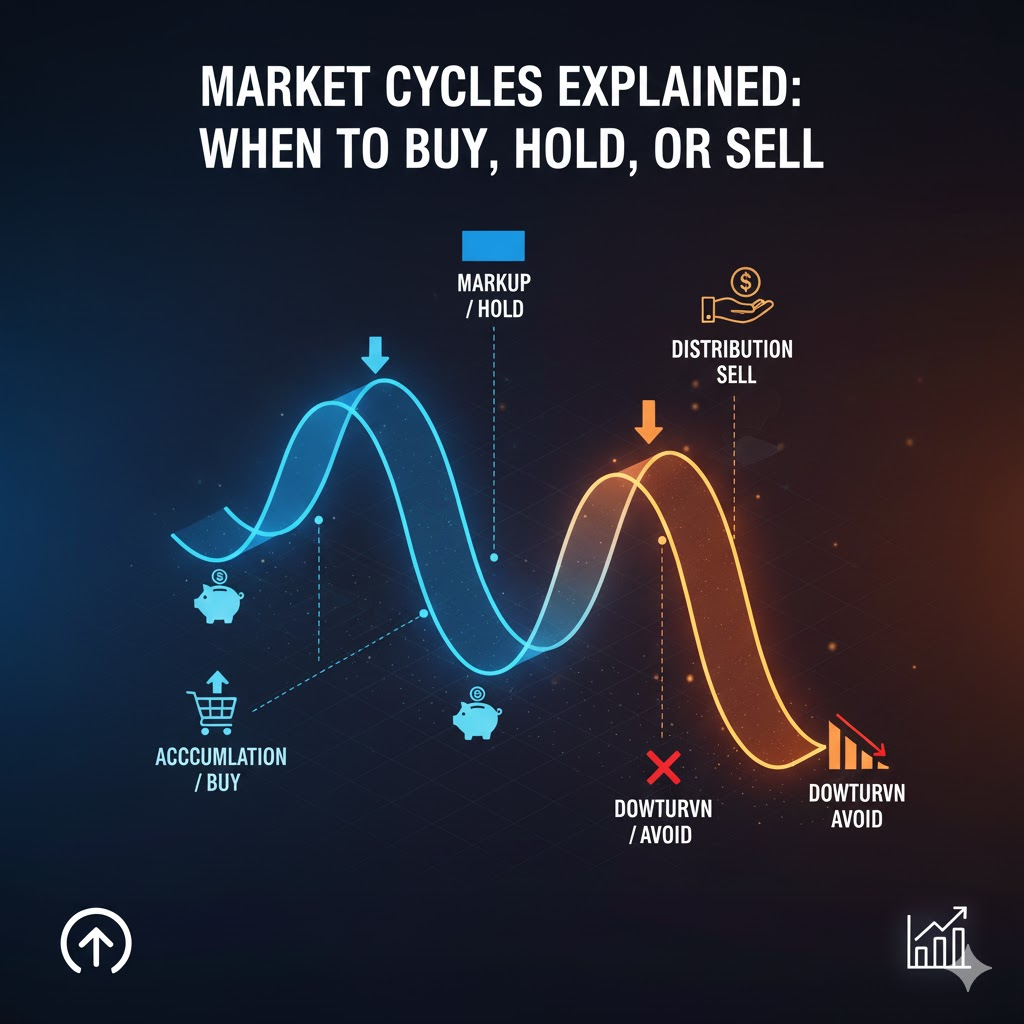
Financial markets move in cycles. Prices rise, peak, fall, and recover over time. Understanding market cycles helps investors make better decisions and avoid emotional reactions during volatility. While no one can predict markets perfectly, knowing how cycles work provides clarity on when to buy, hold, or sell.
This guide breaks down market cycles in a simple and practical way.
What Are Market Cycles
The Four Phases of a Market Cycle
Market cycles typically move through four phases: accumulation, uptrend, distribution, and downtrend. Each phase reflects investor sentiment, economic conditions, and price behavior.
Recognizing these phases helps investors align actions with market conditions.
Phase One Accumulation
What Happens During Accumulation
Accumulation occurs after a market decline. Prices stabilize, and negative sentiment begins to fade. Long term investors and institutions start buying quietly.
Public confidence is still low during this phase.
What Investors Should Do
This phase often presents the best buying opportunities. Valuations are attractive, and downside risk is lower for long term investors.
Gradual investing works well here.
Phase Two Uptrend
What Happens During the Uptrend
Prices begin to rise steadily as confidence returns. Economic data improves, earnings grow, and media coverage becomes positive.
More investors enter the market, pushing prices higher.
What Investors Should Do
Holding investments during this phase is usually the best strategy. Long term investors may continue adding gradually, while staying disciplined.
Avoid chasing overpriced assets.
Phase Three Distribution
What Happens During Distribution
Distribution occurs near market highs. Prices may continue rising but momentum slows. Experienced investors start reducing exposure, while excitement peaks among the public.
Valuations often become stretched.
What Investors Should Do
This is a time to review portfolios and rebalance. Gradually reducing risk and locking in profits can protect gains.
Avoid aggressive buying during this phase.
Phase Four Downtrend
What Happens During the Downtrend
Prices decline as negative news spreads. Fear increases, and many investors sell in panic. Economic indicators weaken, and confidence drops.
This phase can feel uncomfortable but is a normal part of market behavior.
What Investors Should Do
Long term investors should avoid panic selling. Holding quality investments and continuing disciplined investing often leads to better outcomes.
Downtrends eventually create new accumulation opportunities.
Why Timing the Market Is Difficult
Emotions Cloud Judgment
Fear and greed often drive poor decisions. Buying at highs and selling at lows is a common mistake.
Understanding cycles helps reduce emotional reactions.
No Clear Start or End
Market cycles are only clear in hindsight. Trying to time exact tops and bottoms usually fails.
A Smarter Approach to Market Cycles
Focus on Asset Allocation
Maintaining a balanced portfolio aligned with goals reduces the need for frequent decisions.
Use Regular Investing
Regular investing smooths out market volatility and removes the pressure of timing.
Rebalance Periodically
Rebalancing helps manage risk and take advantage of market movements without emotional decisions.
Common Mistakes Investors Make
Chasing Market Highs
Buying during peak excitement often leads to disappointment.
Selling During Fear
Selling in downturns locks in losses and prevents recovery participation.
Conclusion
Market cycles are a natural part of investing. While predicting exact movements is impossible, understanding the phases provides valuable guidance.
Buying during accumulation, holding during uptrends, managing risk during distribution, and staying calm during downtrends help investors navigate markets more confidently. Patience, discipline, and long term thinking remain the most reliable tools for success across all market cycles.