
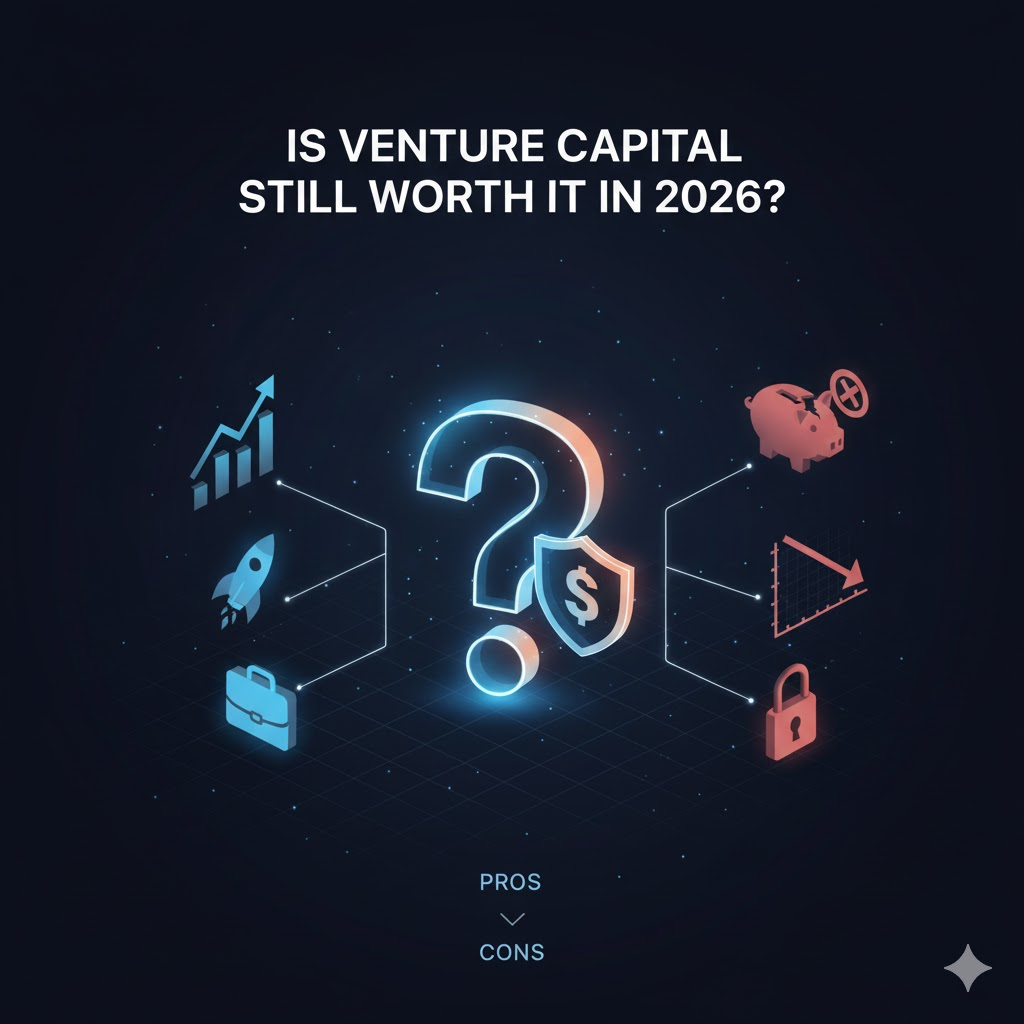
Venture capital (VC) has long been a cornerstone of startup funding, driving innovation and fueling growth across tech, healthcare, fintech, and other high-growth sectors. But with changing market conditions, investor expectations, and evolving funding alternatives, many founders and investors are asking the same question in 2026: Is venture capital still worth it?
The short answer is yes but with important nuances. VC remains valuable, especially for certain types of startups and growth strategies as long as founders understand both the opportunities and the trade-offs.
Here’s a clear, investor-ready look at why venture capital still matters in 2026 and when it may not be the best fit.
What Has Changed in Venture Capital Recently
Market Conditions Are More Selective
After years of abundant funding, many VC firms have become more disciplined. They now focus on profitability, unit economics, and measurable traction rather than just growth potential. This means funding rounds are harder to secure without strong early metrics.
Valuations Have Normalized
The era of sky-high valuations is calming down in many sectors. Investors are placing greater emphasis on fundamentals and long-term sustainability rather than aggressive scale at all costs.
More Funding Alternatives Exist
In 2026, startups have more options than traditional VC:
- Revenue-based financing
- Angel networks and syndicates
- Crowdfunding
- Corporate venture arms
- Bootstrapping with profitability focus
These alternatives give founders flexibility, but they also come with different expectations and growth models.
Why Venture Capital Is Still Worth It
1. Access to Growth Capital
For startups building capital-intensive products (AI platforms, biotech, deep tech), VC remains one of the few viable sources of large-scale funding. VC enables:
- Faster R&D
- Rapid team expansion
- Market scaling before competitors
Many strategic innovations still require deep investment that VC uniquely provides.
2. Valuable Strategic Expertise
VC partners not only provide money but also:
- Industry connections
- Customer introductions
- Hiring support
- Go-to-market guidance
For first-time founders, these strategic resources can make the difference between stagnation and breakout success.
3. Network Effects and Credibility
Being backed by reputable VC firms signals credibility to:
- Other investors (future funding rounds)
- Enterprise customers
- Strategic partners
This social and professional capital can accelerate growth faster than funding alone.
4. Alignment With Bold Growth Goals
If a startup’s vision is to scale globally, disrupt a major industry, or capture mindshare in a competitive market, VC backing often aligns best with those ambitions.
VC investors expect bold growth and can support it.
When Venture Capital Might Not Be Worth It
1. You Prefer Control Over Rapid Scaling
VC investors typically require equity and influence over strategic decisions. If maintaining full founder control is a priority, other funding paths may be more attractive.
2. Profitability Is Achievable Early
Startups with strong early revenue and paths to cash flow may benefit more from reinvestment or revenue-based financing, avoiding dilution and external governance.
3. You Operate in a Niche or Small Market
VC is most attractive when markets are large or fast-growing. In smaller or very specialized sectors, traditional VC may not fit the economics or expected returns.
What Founders Should Ask Before Pursuing VC
Do You Have Clear Traction Metrics?
VC investors want data not just ideas. Proof of market demand, customer retention, and scalable revenue models strengthens your investment case.
Is Your Market Big Enough?
VC thrives on large addressable markets. If your product is highly specialized or limited in scale, other funding options may fit better.
Are You Ready for Growth Pressures?
VC comes with expectations: quarterly performance reviews, growth targets, and sometimes strategic pivots. Founders must be ready to operate under these conditions.
Conclusion
Is venture capital still worth it in 2026?
For many startups, especially those pursuing rapid scaling, deep technology, or market leadership, the answer is yes. Venture capital continues to offer capital, credibility, and strategic support that few other funding models can match.
However, VC is not a one-size-fits-all solution. Founders must weigh the benefits against dilution, control trade-offs, and investor expectations.
Ultimately, VC remains a powerful tool but the smartest founders now consider it as one of several strategic choices rather than the default path.