
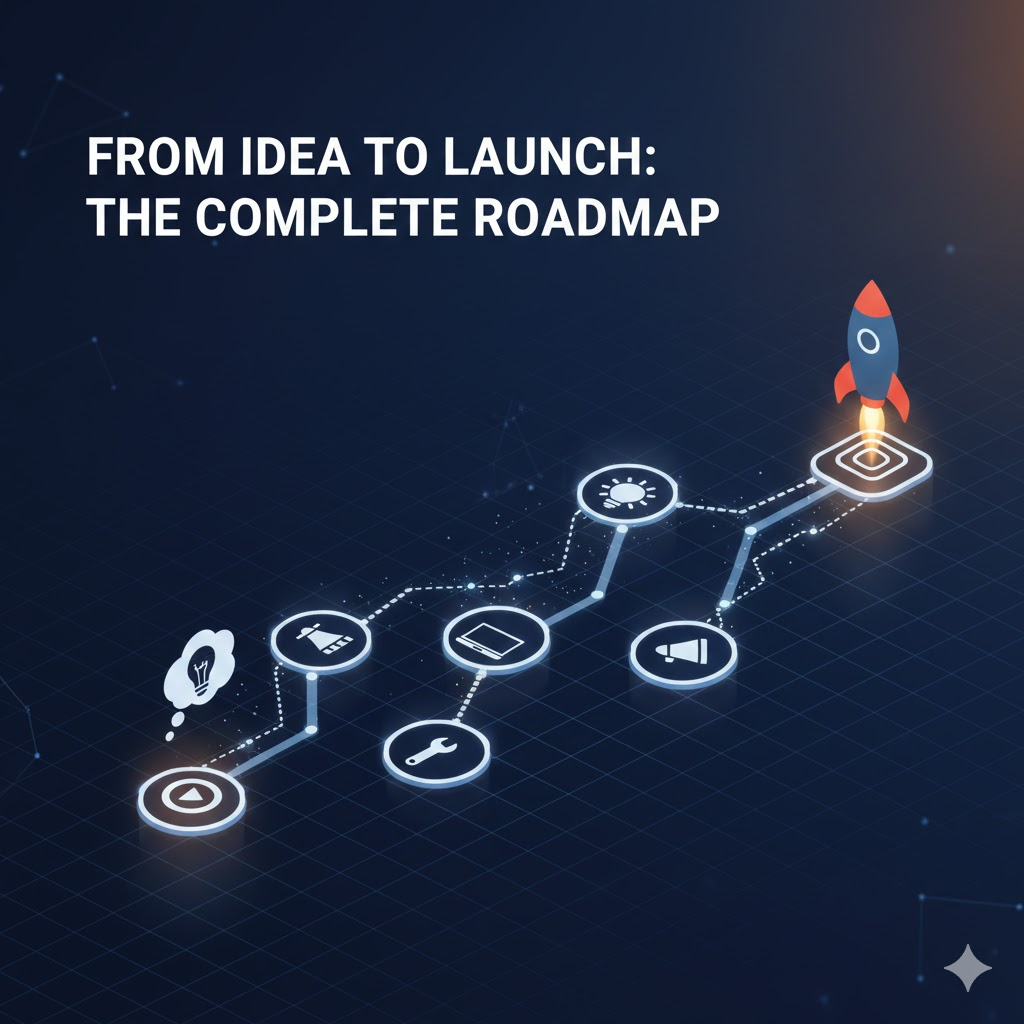
Turning an idea into a launched product or business is an exciting journey, but it can also feel overwhelming without a clear plan. Many great ideas fail not because they lack potential, but because execution is unclear or rushed. A structured roadmap helps transform ideas into reality with focus and confidence.
This complete roadmap walks through each stage from idea validation to a successful launch.
Step 1 Clarify and Validate Your Idea
Define the Core Problem
Every strong idea solves a real problem. Clearly define what problem you are addressing and who experiences it. Be specific rather than broad. A well-defined problem sets the foundation for everything that follows.
Validate Demand Early
Before building anything, test whether people actually want your solution. Talk to potential users, run surveys, or analyze existing alternatives. Early validation reduces risk and saves time.
Step 2 Research the Market
Understand Your Target Audience
Identify who your ideal users are, their pain points, and how they currently solve the problem. Understanding user behavior helps you design a solution that truly fits their needs.
Analyze Competitors
Study competitors and alternatives in the market. Look at what they do well and where they fall short. This helps you identify opportunities to differentiate your offering.
Step 3 Define Your Value Proposition
Explain Why Your Solution Is Different
Your value proposition explains why customers should choose you. Focus on the specific benefit you deliver and how it improves the user’s situation.
Keep It Simple and Clear
Avoid complicated language. A strong value proposition can be understood in seconds.
Step 4 Plan the Business Model
Decide How You Will Make Money
Choose a revenue model that aligns with your product and audience. This could include subscriptions, one-time payments, usage-based pricing, or services.
Estimate Costs and Pricing
Understand your key costs and set pricing that balances profitability with customer value.
Step 5 Build a Minimum Viable Product
Focus on Core Features Only
A minimum viable product includes only the essential features needed to solve the core problem. Avoid overbuilding at this stage.
Use Feedback to Improve
Launch the MVP to a small group of users and collect feedback. Use real usage data to guide improvements.
Step 6 Prepare for Launch
Create a Simple Go to Market Plan
Decide how you will reach your first customers. This may include content marketing, social media, partnerships, or direct outreach.
Set Up Essential Systems
Ensure payment, onboarding, customer support, and analytics systems are ready before launch.
Step 7 Launch and Learn
Launch With a Clear Message
Communicate your value clearly at launch. Focus on the problem you solve and the outcome users can expect.
Track Performance Closely
Monitor user behavior, feedback, and key metrics. Early insights are valuable for refining your product and messaging.
Step 8 Iterate and Scale
Improve Based on Real Data
Use customer feedback and performance data to refine features, pricing, and positioning.
Plan for Sustainable Growth
Once product-market fit is clear, invest in marketing, partnerships, and operational improvements to scale responsibly.
Common Mistakes to Avoid
Building Without Validation
Skipping validation often leads to wasted effort. Always test assumptions early.
Trying to Do Too Much Too Soon
Focus and simplicity lead to faster progress and better outcomes.
Conclusion
Going from idea to launch is a process that requires clarity, discipline, and continuous learning. By following a structured roadmap, you reduce risk and increase your chances of success.
Every successful product starts with a simple idea, but it is thoughtful execution that turns that idea into something real. With the right approach, you can move from concept to launch with confidence and purpose.