
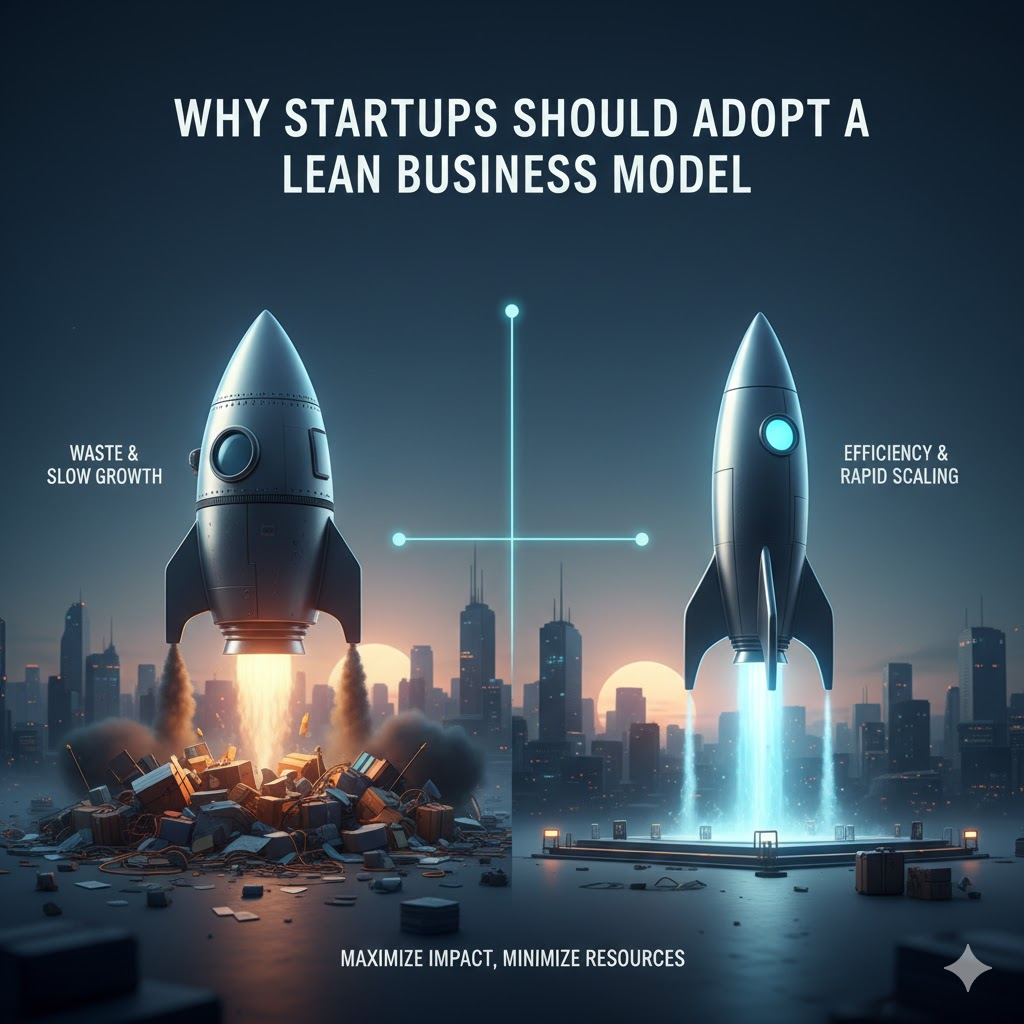
Startups operate in environments filled with uncertainty, limited resources, and constant change. In such conditions, adopting a lean business model is no longer optional, it is a strategic advantage. A lean approach helps startups move faster, reduce risk, and build products that truly meet market needs.
What Is a Lean Business Model
A lean business model focuses on maximizing customer value while minimizing waste. Instead of investing heavily upfront, startups test ideas quickly, gather feedback, and refine their offerings based on real-world insights. This approach prioritizes learning, efficiency, and adaptability.
Faster Validation of Ideas
Lean startups avoid long development cycles.
Build, Test, Learn
By launching a minimum viable product, founders can validate assumptions early. Customer feedback reveals what works and what does not, allowing teams to pivot before resources are exhausted.
Reduced Market Risk
Early validation lowers the chances of building products that customers do not want, saving both time and money.
Better Use of Limited Resources
Startups rarely have the luxury of excess capital.
Cost Efficiency
Lean models focus spending on essentials. Teams avoid unnecessary features, large offices, or premature scaling, ensuring every dollar contributes to growth.
Smarter Prioritization
Clear priorities help founders focus on high-impact activities rather than distractions.
Greater Flexibility and Adaptability
Markets evolve quickly.
Faster Pivots
Lean businesses can adjust strategies, pricing, or target audiences without major disruptions.
Continuous Improvement
Ongoing feedback allows startups to refine products continuously rather than relying on fixed plans.
Stronger Customer-Centric Approach
Lean startups build with customers, not assumptions.
Real Customer Insights
Regular interaction with users ensures products solve real problems and deliver value.
Higher Retention
When customers feel heard, loyalty and engagement increase.
Improved Investor Confidence
Investors favor startups that demonstrate discipline.
Proof Over Promises
Lean models show traction, efficiency, and learning speed, which are attractive signals during fundraising.
Lower Burn Rate
Responsible cash management reduces risk and extends runway.
Common Misconceptions About Lean Models
Lean does not mean cutting corners or thinking small. It means building smarter, testing faster, and scaling with confidence once demand is proven.
Conclusion
Adopting a lean business model allows startups to grow with clarity and control. By focusing on learning, efficiency, and customer value, founders can reduce risk, attract investors, and build sustainable businesses in competitive markets. In today’s startup ecosystem, lean thinking is not just an advantage, it is a necessity.