
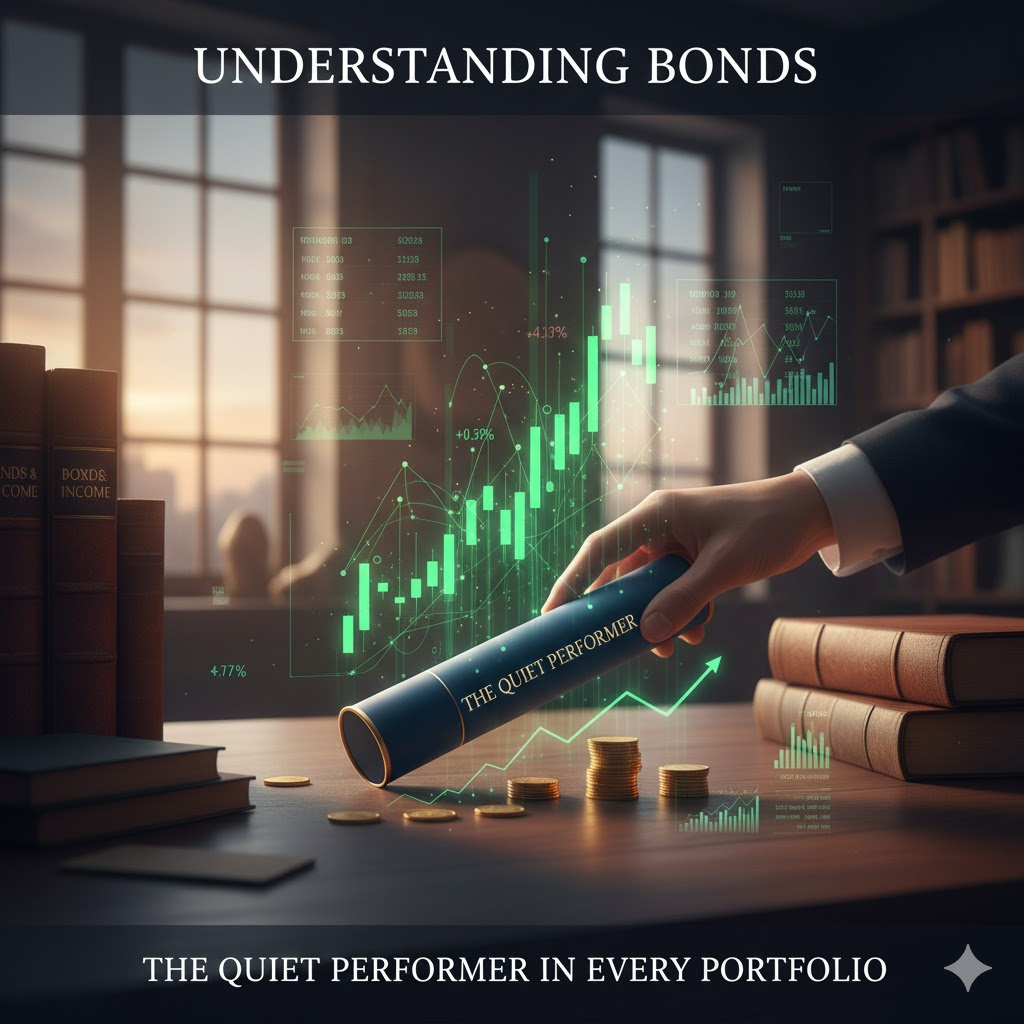
Bonds may not generate the same excitement as stocks or emerging investments, but they play a vital role in building a balanced portfolio. Often described as the quiet performer, bonds provide stability, predictable income, and protection during market volatility. Understanding how bonds work helps investors make smarter, more resilient investment decisions.
What Are Bonds
A bond is a loan made by an investor to a government, corporation, or institution. In return, the issuer agrees to pay regular interest and return the original investment at maturity. Bonds are considered fixed-income investments because they provide predictable cash flows.
Why Bonds Matter in a Portfolio
Bonds serve as a stabilizing force within an investment portfolio.
Income Generation
Bonds provide regular interest payments, offering a reliable income stream. This makes them particularly attractive for conservative investors and those nearing retirement.
Risk Reduction
Compared to stocks, bonds are generally less volatile. When equity markets experience downturns, bonds often hold value better, helping to balance overall portfolio risk.
Capital Preservation
High-quality bonds protect invested capital and reduce exposure to sudden market swings, making them an important defensive asset.
Types of Bonds Investors Should Know
Different bonds serve different investment objectives.
Government Bonds
Issued by national governments, these bonds are considered among the safest investments. They offer lower returns but high reliability.
Corporate Bonds
Companies issue corporate bonds to fund operations and expansion. They typically offer higher yields than government bonds, with varying levels of risk depending on the issuer’s credit quality.
Municipal Bonds
Issued by local governments, municipal bonds often provide tax advantages, making them appealing for certain investors.
Bond Funds and ETFs
Bond funds offer diversification by investing in a basket of bonds, providing easier access and liquidity compared to individual bonds.
How Bonds Perform During Market Volatility
Bonds tend to perform well during periods of economic uncertainty. As investors seek safety, demand for bonds often rises, supporting prices. This inverse relationship with stocks makes bonds a valuable hedge against market fluctuations.
Interest Rates and Bond Prices
Interest rates have a direct impact on bond performance.
- When interest rates rise, bond prices typically fall
- When interest rates decline, bond prices usually increase
Understanding this relationship helps investors choose bonds that align with current and expected market conditions.
Who Should Invest in Bonds
Bonds are suitable for a wide range of investors.
- Conservative investors seeking steady income
- Investors balancing high-risk assets
- Those planning for retirement or long-term financial security
Bonds help maintain portfolio stability across different life stages.
Common Misconceptions About Bonds
Many investors underestimate bonds due to lower returns. However, their role is not rapid growth but consistency and protection. Over time, bonds contribute significantly to smoother portfolio performance.
Conclusion
Bonds may be quiet, but their impact is powerful. By providing income, reducing risk, and preserving capital, bonds form the foundation of a well-balanced investment portfolio. Investors who understand and use bonds strategically can achieve greater stability and long-term confidence in their financial plans.