
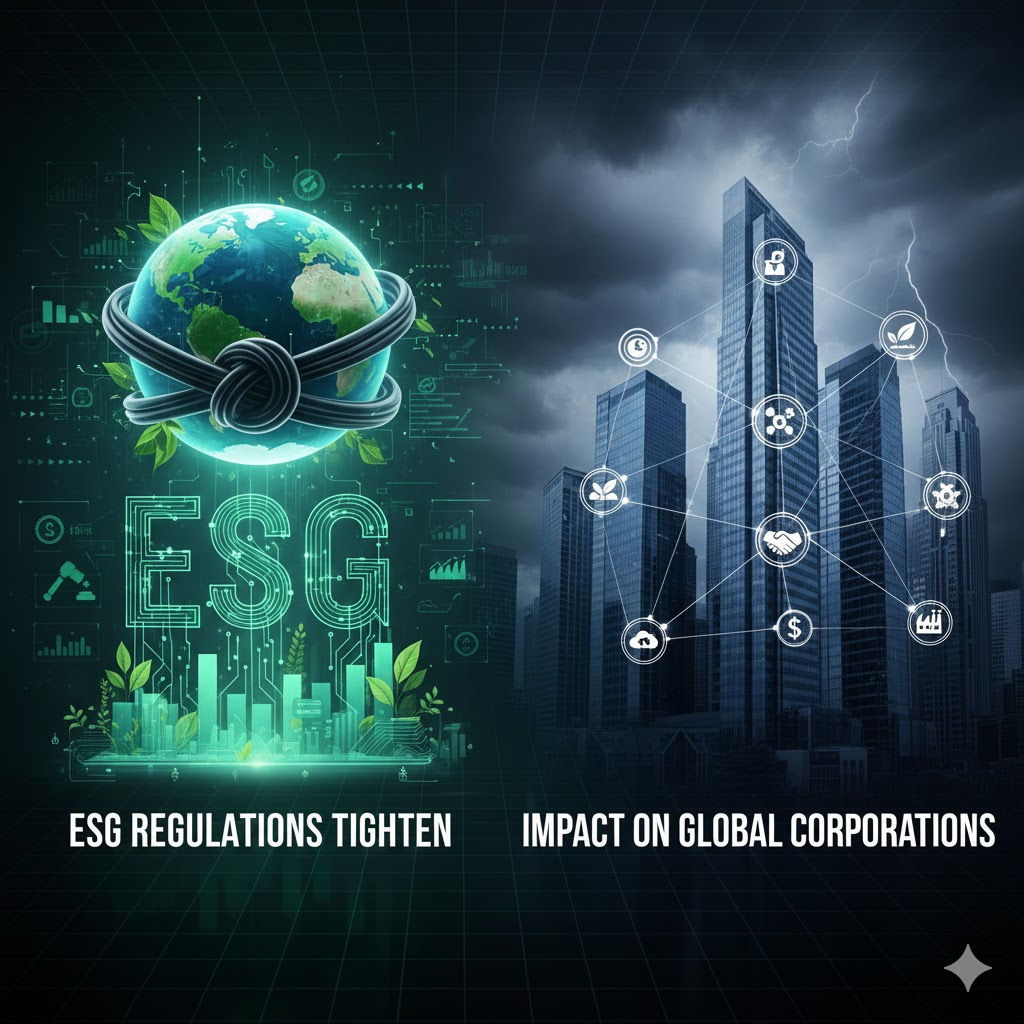
Environmental, Social, and Governance (ESG) considerations are no longer optional for businesses they are increasingly becoming a regulatory requirement. Governments and regulatory bodies around the world are tightening ESG standards, pushing companies to adopt more sustainable and socially responsible practices. This shift is reshaping how global corporations operate, invest, and report performance.
1. Stricter Environmental Compliance
Environmental regulations are intensifying, targeting emissions, energy use, and waste management. Companies are now required to measure, report, and reduce their environmental footprint. For global corporations, this often means investing in cleaner technologies, adopting renewable energy sources, and implementing sustainable supply chain practices. While these measures involve upfront costs, they also help mitigate long-term risks such as carbon taxes, fines, and reputational damage.
2. Increased Focus on Social Responsibility
Social factors including labor practices, diversity and inclusion, and community engagement are receiving greater scrutiny. Regulators and stakeholders expect companies to demonstrate ethical practices, fair labor standards, and meaningful social contributions. Corporations are responding by enhancing workplace policies, improving transparency, and actively supporting local communities, which can also strengthen brand reputation and employee engagement.
3. Governance and Transparency Requirements
Governance is at the core of ESG compliance. Companies are expected to maintain strong ethical standards, board oversight, and transparent reporting. Investors increasingly demand clarity on corporate decisions, risk management, and ESG performance metrics. Firms that fail to meet governance standards may face investor withdrawal, penalties, or damage to credibility in global markets.
4. Financial Implications
While ESG compliance can involve significant investment, many corporations are recognizing long-term financial benefits. Sustainable operations can reduce operational costs, improve efficiency, and attract ESG-focused investors. Conversely, non-compliance can lead to fines, legal exposure, and restricted access to international markets. Analysts predict that ESG-aligned companies may enjoy better valuation and resilience in uncertain economic conditions.
5. Strategic Shift and Innovation
Tighter ESG regulations are driving companies to rethink their strategies. From reengineering products and services to integrating ESG metrics into corporate planning, businesses are innovating to meet both regulatory expectations and consumer demand for responsible practices. Those that embrace ESG proactively can gain a competitive edge, differentiating themselves as leaders in sustainability and ethical business.
6. Global Implications
For multinational corporations, navigating ESG regulations across multiple regions adds complexity. Standards vary by country, and compliance requires robust monitoring, reporting systems, and alignment with international frameworks. Companies investing in harmonized ESG strategies are better equipped to manage cross-border operations and maintain investor confidence.
Conclusion
Tightening ESG regulations signal a significant shift in the corporate landscape. Companies must now prioritize sustainability, social responsibility, and governance transparency to remain competitive and compliant. While challenges exist, corporations that embrace ESG proactively are likely to benefit from stronger brand reputation, investor trust, and long-term resilience in a rapidly evolving global market.