
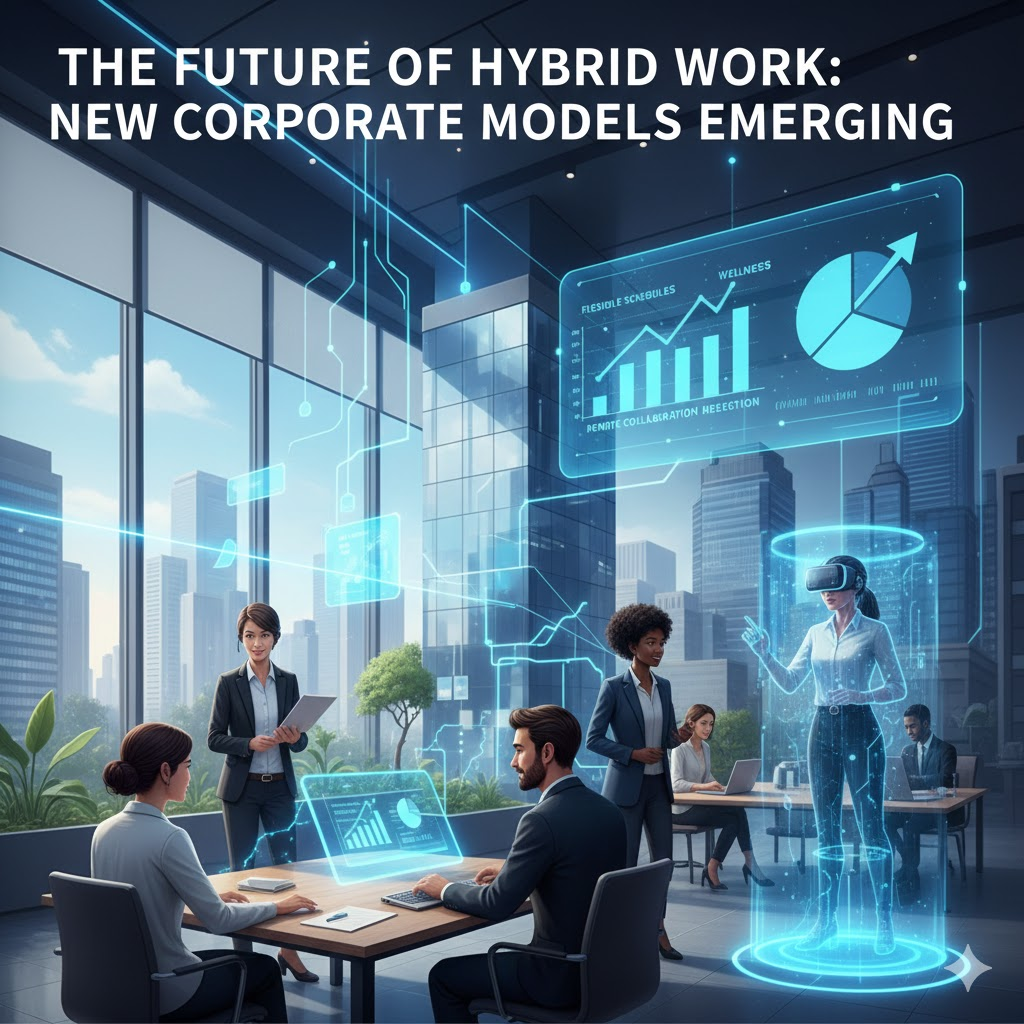
The workplace is no longer confined to a single office or rigid 9-to-5 schedule. The COVID-19 pandemic accelerated a shift that was already underway hybrid work. Today, companies are not just adapting to remote and in-office work; they are reimagining the very structure of how work happens. This evolution is giving rise to innovative corporate models that are shaping the future of work.
1. Flexibility as the New Standard
Hybrid work is redefining flexibility. Employees can now choose where and when they work, balancing personal responsibilities with professional demands. Organizations that embrace this approach are seeing higher job satisfaction, improved retention, and a more engaged workforce. Flexibility has become a key factor in attracting top talent in a competitive market.
2. Redesigning Physical Workspaces
As employees spend part of their time at home, the office is transforming. Rather than rows of desks, offices are becoming collaborative hubs spaces designed for meetings, brainstorming sessions, and social interaction. This shift reduces real estate costs while encouraging team cohesion and creativity when employees come together.
3. Emphasis on Outcome over Hours
Hybrid models are moving the focus from hours logged to results delivered. Performance is increasingly measured by outcomes and impact rather than physical presence. This approach fosters accountability, empowers employees, and encourages innovation, as people have the freedom to work in ways that maximize their productivity.
4. Technology as the Backbone
A successful hybrid model relies on seamless technology. Cloud platforms, collaboration tools, and virtual communication systems are essential for keeping distributed teams connected. Companies are investing heavily in digital infrastructure to ensure that remote work is as effective and integrated as in-office work.
5. Evolving Corporate Culture
Maintaining a strong company culture in a hybrid environment requires intentional effort. Leaders are finding new ways to foster connection, shared values, and team engagement. Virtual town halls, regular check-ins, and digital recognition programs are becoming standard practices to ensure employees feel valued and included.
6. Data-Driven Work Strategies
Hybrid work models allow organizations to track productivity, collaboration, and employee well-being more effectively. By analyzing these metrics, companies can continuously refine their approach, making data-driven decisions that optimize performance and support a healthy work-life balance.
Conclusion
The future of work is hybrid, but it’s more than a mix of remote and in-office schedules it’s a new corporate model that prioritizes flexibility, technology, and results. Organizations that adapt thoughtfully to this paradigm will not only attract and retain top talent but also create workplaces that are more productive, innovative, and human-centric.