
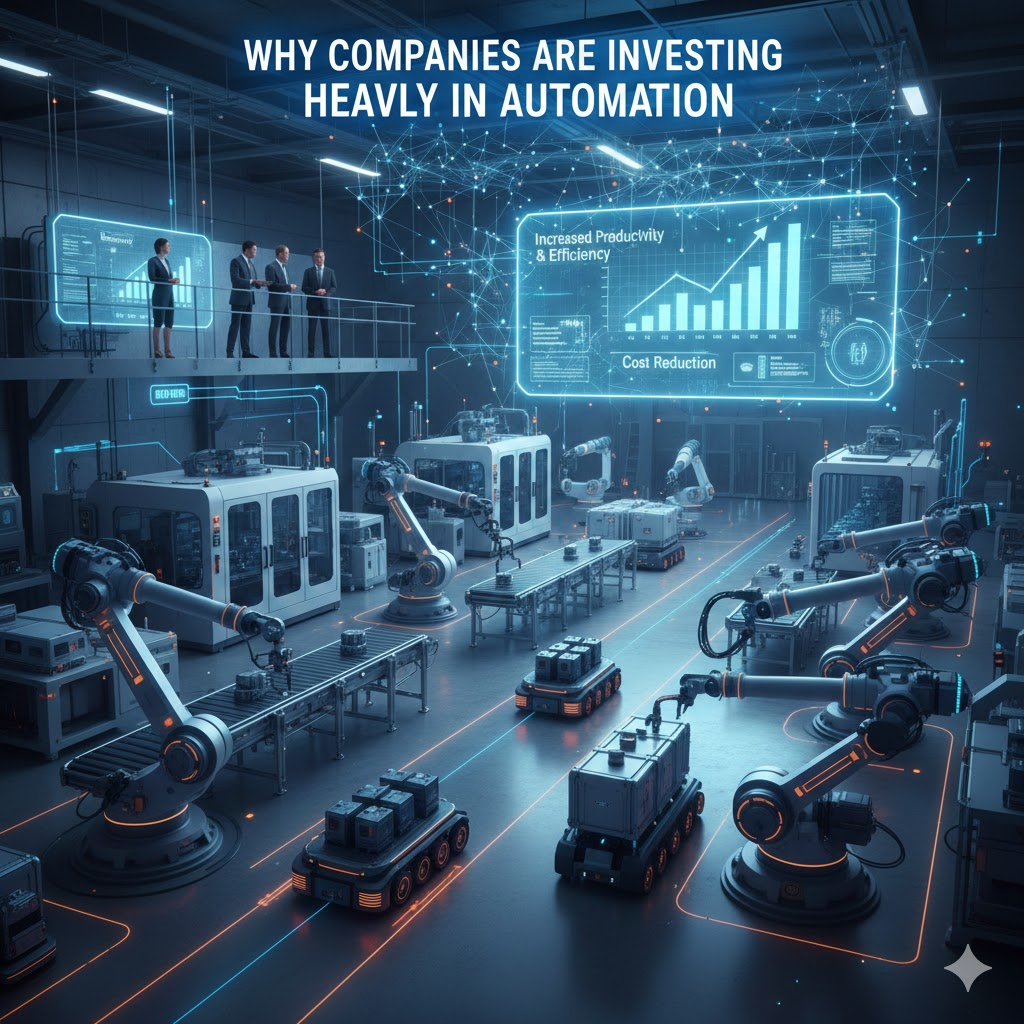
In today’s fast-paced business environment, companies are increasingly turning to automation to stay competitive. From manufacturing floors to customer service operations, automation is reshaping the way businesses operate. But what is driving this widespread investment, and why are organizations willing to spend heavily on it?
1. Boosting Efficiency and Productivity
One of the most immediate benefits of automation is its ability to streamline repetitive tasks. Processes that once required hours of manual work can now be completed in minutes. For example, automated data entry, inventory management, and billing systems reduce human error and free employees to focus on higher-value work. This efficiency not only accelerates operations but also improves overall productivity across the organization.
2. Reducing Operational Costs
While the initial investment in automation technology can be significant, companies often see substantial long-term savings. Automation reduces the need for extensive labor in repetitive tasks, minimizes errors that can lead to costly corrections, and optimizes resource usage. Over time, these cost reductions contribute to healthier profit margins and a stronger competitive position.
3. Enhancing Accuracy and Consistency
Humans are prone to mistakes, especially when performing repetitive or data-heavy tasks. Automation ensures consistent, error-free execution of processes. Whether it’s producing a product on an assembly line or processing customer orders, automated systems maintain high standards of quality and reliability, reducing the risk of costly mistakes and improving customer satisfaction.
4. Enabling Scalability
For companies experiencing growth, scaling operations manually can be slow and resource-intensive. Automation allows businesses to handle increased demand without proportionally increasing staff or resources. From processing more transactions to managing larger supply chains, automation supports sustainable growth and helps companies respond quickly to market changes.
5. Driving Innovation
By freeing employees from mundane tasks, automation enables them to focus on creativity, strategy, and innovation. Businesses can invest in research, develop new products, and improve customer experiences. In a world where innovation is a key differentiator, automation acts as a catalyst, giving companies the bandwidth to explore new opportunities.
6. Adapting to a Digital-First Economy
The digital revolution has reshaped customer expectations. Today’s consumers demand faster service, personalized experiences, and seamless interactions across channels. Automation equips companies to meet these demands efficiently. From AI-powered customer support to automated marketing campaigns, businesses can deliver superior experiences while staying cost-effective.
Conclusion
Investing in automation is no longer just an option for forward-thinking companies—it’s a necessity. The combination of efficiency, cost savings, scalability, and enhanced innovation makes automation a strategic priority. As technology continues to evolve, companies that embrace automation will be better positioned to thrive in an increasingly competitive, digital-driven world.