
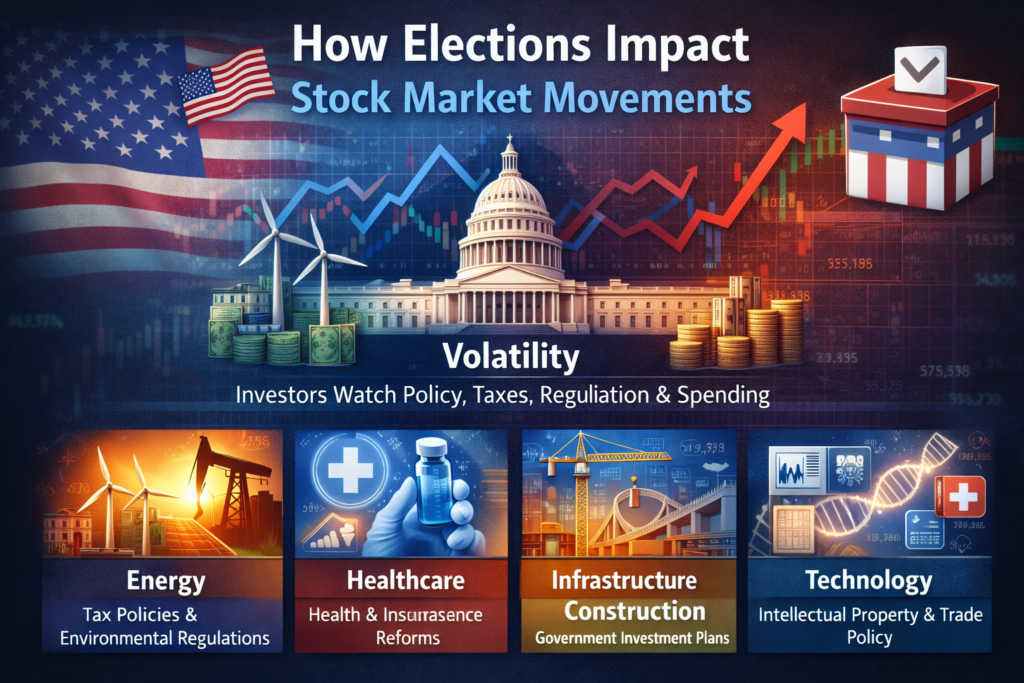
Elections are not just political events—they often create waves in the financial markets. Investors pay close attention to election outcomes because changes in policy, regulations, taxation, and government spending can significantly affect corporate profits, economic growth, and investor sentiment. Understanding how elections impact stock market movements helps investors make informed decisions.
Market Volatility Around Elections
Stock markets tend to become more volatile in the months leading up to elections. Uncertainty about who will win and what policies will be enacted can lead to swings in stock prices. Traders often adjust their positions to hedge risk, while long term investors may pause major investment decisions until results become clear.
Policy and Regulatory Expectations
The anticipated policy direction of a new administration can influence sectors differently. For example:
- Companies in renewable energy may benefit if the government prioritizes green initiatives.
- Financial institutions may be affected by changes in banking or tax regulations.
- Healthcare stocks often respond to potential policy reforms or new legislation.
Investors analyze party platforms, campaign promises, and historical voting trends to anticipate sector-specific impacts.
Investor Sentiment and Market Psychology
Markets react not only to actual policies but also to sentiment and perception. A surprising election outcome may trigger a rapid sell-off or rally, driven by investor expectations rather than immediate economic impact. Emotional reactions, uncertainty, and media coverage amplify these movements.
Historical Trends
Historically, markets often experience short-term volatility around elections, followed by a return to trend once uncertainty resolves. While markets may initially react to fears or optimism, fundamentals like earnings growth, economic health, and global conditions ultimately drive long-term returns.
Strategies for Investors
- Stay Diversified: Maintaining a diversified portfolio can help weather volatility associated with elections.
- Focus on Fundamentals: Strong companies with solid balance sheets and consistent earnings tend to be resilient regardless of political shifts.
- Avoid Panic Decisions: Making hasty moves based on temporary market swings can harm long-term performance.
- Consider Long-Term Goals: Elections may influence short-term movements, but long-term investment success depends on disciplined planning and patience.
Sector-Specific Implications
Some sectors are more sensitive to political changes:
- Energy: May be influenced by tax policies, environmental regulations, or subsidies.
- Healthcare: Affected by proposed reforms, insurance regulations, and government spending.
- Infrastructure & Construction: Can benefit from government investment plans.
- Technology & Innovation: May respond to policies on intellectual property, trade, or research funding.
Conclusion
Elections can create both opportunities and risks for investors. While short-term volatility is common, long-term market performance tends to reflect economic fundamentals rather than political outcomes alone. By understanding potential impacts, staying diversified, and focusing on long-term goals, investors can navigate election periods with confidence rather than fear.