
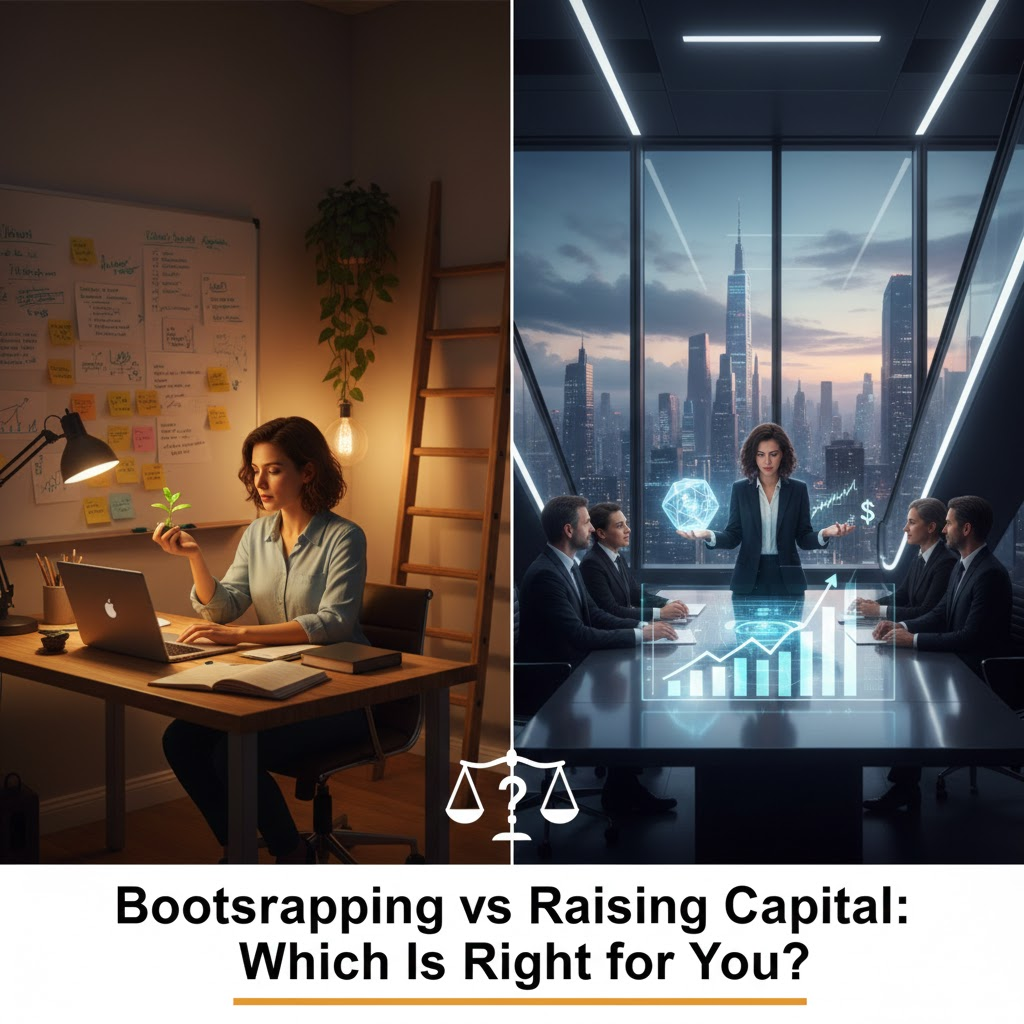
One of the most important decisions an entrepreneur faces is how to fund a business. Should you bootstrap using personal savings and early revenue, or raise external capital from investors? There is no universal right answer. The best choice depends on your goals, risk tolerance, industry, and the type of business you are building.
Understanding the trade offs between bootstrapping and raising capital can help you choose a path that aligns with both your vision and your values.
What Bootstrapping Really Means
Bootstrapping involves building a company using personal funds, operating cash flow, or modest loans without taking outside investment. Founders who bootstrap maintain full ownership and control over decisions.
This approach encourages discipline. Every expense matters, and growth is driven by real customer demand rather than investor expectations. Many profitable and sustainable businesses have been built this way, especially in service based, software, and niche market segments.
However, bootstrapping often means slower growth. Limited capital can restrict hiring, marketing, and product development, requiring founders to prioritize carefully and move at a measured pace.
The Case for Raising Capital
Raising capital typically involves securing funding from angel investors, venture capital firms, or strategic partners. This path provides access to larger financial resources that can accelerate growth.
For businesses operating in highly competitive or capital intensive industries, external funding can be essential. It allows companies to scale quickly, invest heavily in technology, enter new markets, and attract top talent.
Beyond money, investors often bring valuable expertise, networks, and credibility. These advantages can open doors that may be difficult to access when bootstrapping alone.
Control and Ownership Considerations
One of the biggest differences between the two approaches is control. Bootstrapped founders retain full decision making authority and are free to build the company on their own terms. There is no pressure to meet aggressive growth targets or plan for a rapid exit.
In contrast, raising capital means sharing ownership and aligning with investor expectations. Investors typically seek high growth and clear exit strategies, which can influence product decisions, company culture, and long term direction.
Founders must be comfortable with accountability to stakeholders and a more structured governance environment.
Risk, Pressure, and Personal Comfort
Bootstrapping places more financial risk on the founder, especially in the early stages. Personal savings and time are often on the line, which can create emotional pressure.
Raising capital spreads financial risk but introduces performance pressure. Investor backed companies are expected to grow fast, and failure can carry reputational consequences as well as financial ones.
Understanding how you handle stress, uncertainty, and accountability is critical when choosing between these paths.
Speed vs Sustainability
Capital funded startups often prioritize speed. Rapid growth can help capture market share and establish dominance, but it can also lead to inefficiencies if not managed carefully.
Bootstrapped businesses tend to focus on sustainability. Growth is tied closely to revenue, leading to healthier unit economics and long term stability.
Neither approach is inherently better. The key is matching your funding strategy to your business model and market conditions.
When Bootstrapping Makes Sense
Bootstrapping is often the right choice if your business can generate early revenue, does not require heavy upfront investment, and allows for steady organic growth. It suits founders who value independence, flexibility, and long term ownership.
When Raising Capital Is the Better Option
Raising capital may be necessary if your business requires significant upfront costs, operates in a winner takes most market, or needs to scale quickly to stay competitive. It is also suitable for founders who are comfortable sharing control in exchange for faster growth.
Conclusion
Choosing between bootstrapping and raising capital is a strategic decision that shapes the future of your business. Both paths come with advantages and challenges. By understanding your goals, industry dynamics, and personal preferences, you can choose the funding approach that supports not just growth, but the kind of company you want to build.